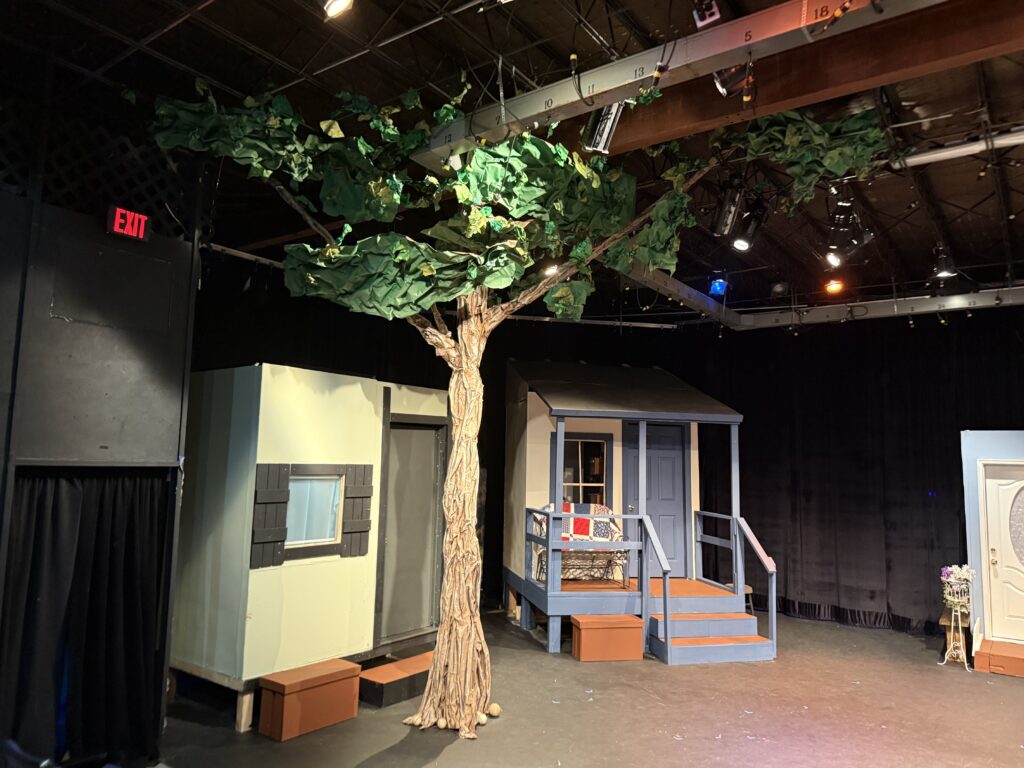
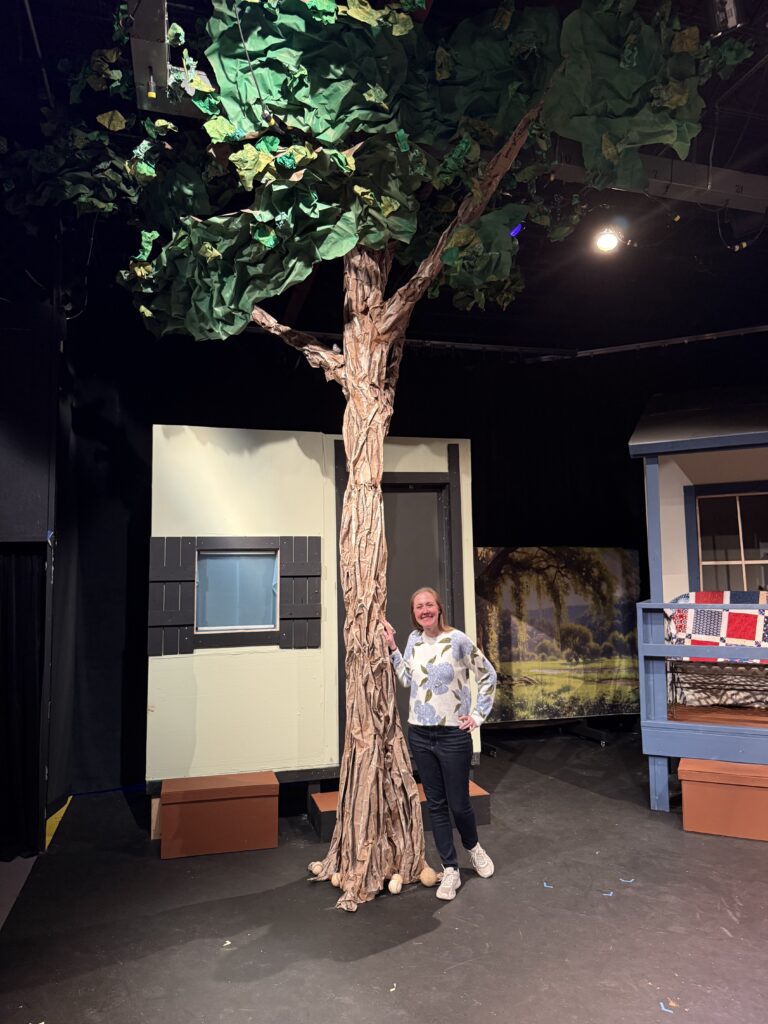
I created the tree for Electric City Playhouse’s 2026 production of To Kill A Mockingbird, directed by Scott Gibson. It had to contain a knothole at a specific location for Scout to find small objects in, and he expressed a preference for a large tree. Otherwise, I had free reign.
The building was not originally designed to be a theater, and contains a few poles that support the ceiling. One of these is on stage, where it was able to serve as a sturdy foundation for the tree.
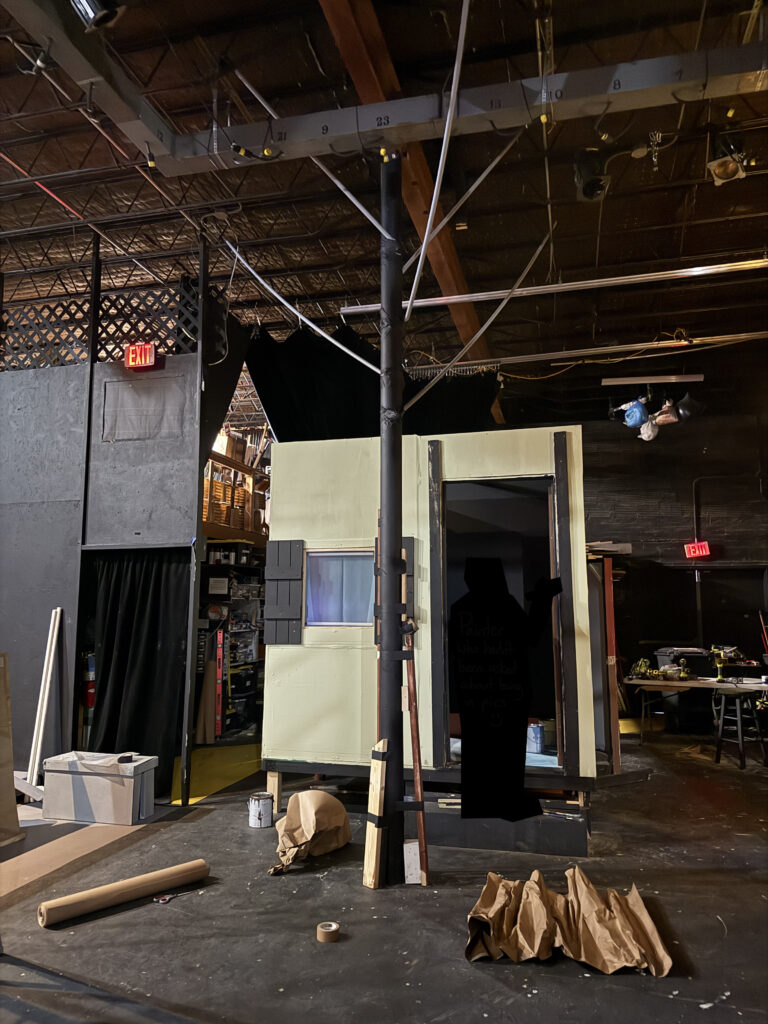
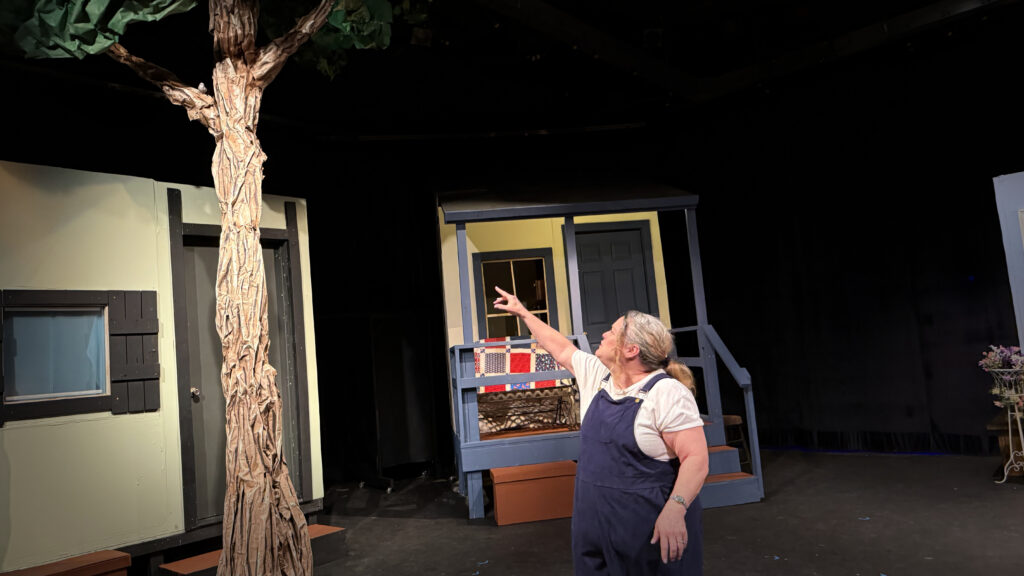
I taped scrap wood to the base of the pole to add a little more bulk there and serve as a shelf for Scout’s knothole. I’d have loved to make the trunk even thicker, but our black box theater has seating on three sides. Making the tree much larger would create too much visual obstruction for the audience at the edges of our left seating section. For the knothole, I took the cardboard core from an empty spool of 3D printer filament and taped over one of the cylinder’s caps to close it off. To lay the foundation for branches, I scrounged up some PVC pipe from our collection backstage, wedged one end into the metal braces on the ceiling, and aggressively secured the other to the pole with tape and zip ties.

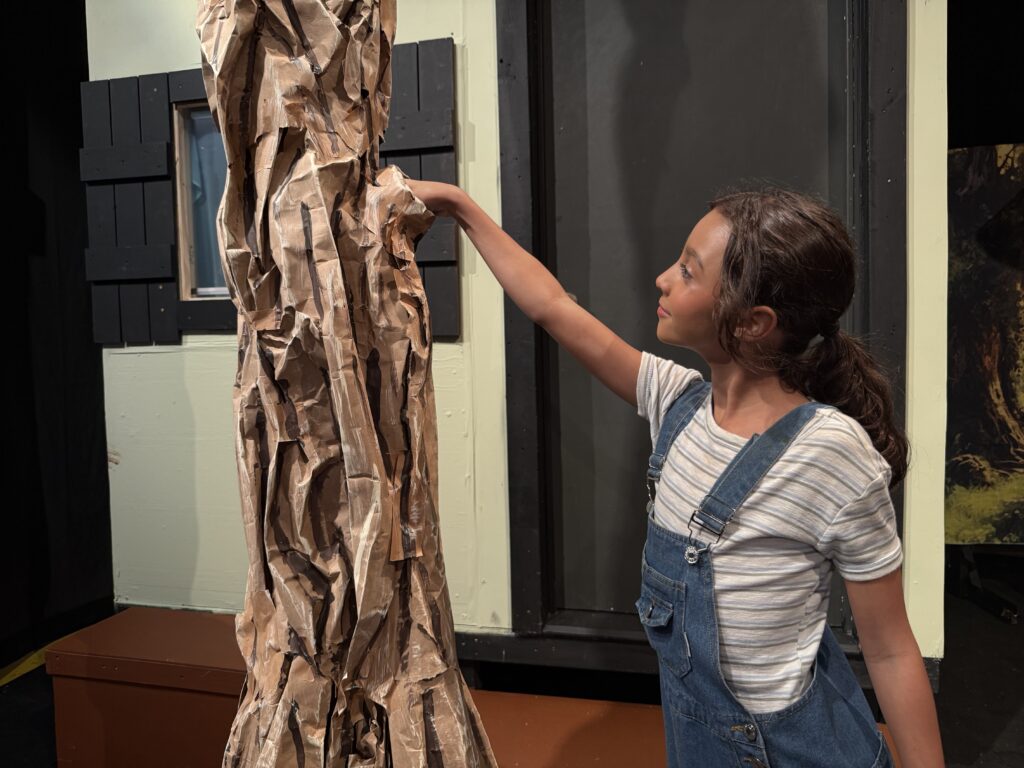
The bark was made out of paper drop cloth. I crimped it for texture before using similarly-colored paper tape to attach it to the pole. Afterwards, I added some more visual depth by painting a dark wash in the bark’s crevices, and a lighter coat on protruding surfaces.


The leaves were created from paper that I painted green and crumpled up to dry. The large masses of leaf were made from the remaining swaths of paper drop cloth, and the smaller leaves were sourced from paper previously destined for recycling.
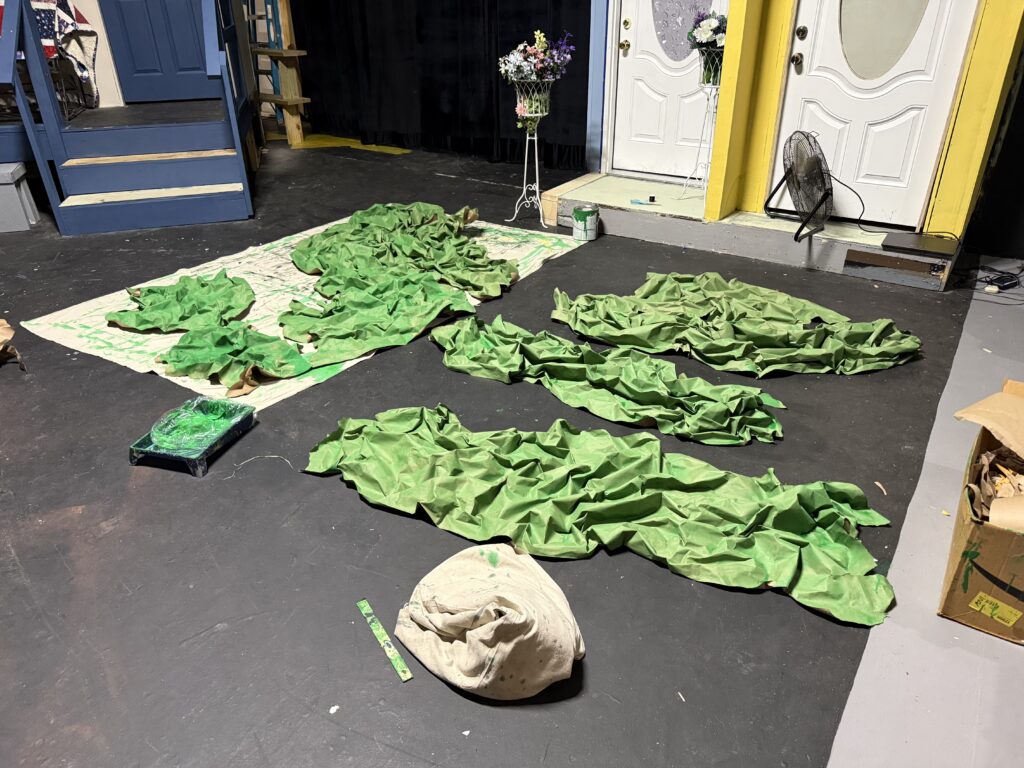

Relying on tape, glue, Velcro or other similar solutions to secure the leaves would have greatly limited where I could place them by necessitating physical contact between surfaces. The solution I landed on was to use a needle and thread to sew through the leaves, then tie them to the ceiling and light grid. This way, they could be suspended virtually anywhere at any angle. I started with the large masses of leaves, and then added the small ones for texture and detail.


Lighting designer Cole Lewis served as my eyes on the ground, helped confirm that my leaf placements were not going to obstruct lights or cause a fire, pushed the scaffold around, took pictures of me with the tree, and brought me pizza. Thank you, Cole!